
In modern optics, optical windows may appear unremarkable at first glance—yet they play an indispensable role. Think of them as specialized “windows” that serve critical functions across a wide range of optical and electronic devices. Below, we explore optical windows in depth.
1.Fundamental Concepts and Core Functions
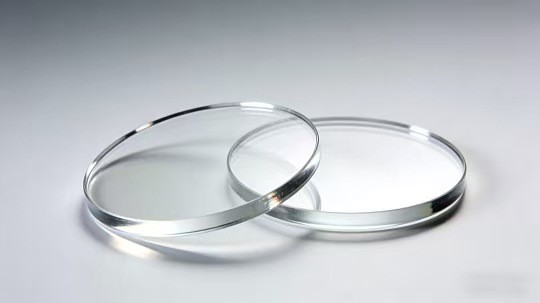
An optical window is, in essence, a transparent or semi-transparent “aperture” integrated into optical or electronic systems—typically fabricated from materials such as optical glass, fused quartz, or specialty polymers. Unlike lenses, its primary purpose is not to manipulate light for imaging, but rather to provide physical protection while enabling controlled optical transmission.
As a physical barrier, the window serves as the first line of defense. In industrial cameras, sensors, laser systems, precision instruments, and even outdoor lighting fixtures, internal components are often highly sensitive and delicate. A robust, durable window effectively shields them from moisture, oil, dust, and accidental mechanical impact—significantly extending equipment service life and preserving operational stability. For instance, on automated factory production lines, windows mounted on inspection instruments safeguard core optical elements from environmental interference, ensuring accurate light transmission and thereby enhancing manufacturing efficiency.
As an optical transmission medium, the window must allow target light signals to pass through with minimal loss. Performance requirements—including transmittance, spectral transmission range, and reflectance—vary depending on the application. Visible-light windows demand high transmittance and low reflectance; infrared temperature-sensing windows must exhibit strong transmission within specific IR bands. In spectrometers or microscopes, windows act as sealed barriers for sample chambers—permitting light passage without compromising internal environmental integrity—making them vital in scientific research and medical diagnostics.
In devices requiring waterproofing, dustproofing, or inert-gas purging, optical windows form part of a hermetic seal—bonded precisely to the housing via adhesive or welding. Here, material strength and sealing reliability are paramount. In aerospace applications—such as aircraft or satellite observation ports—windows must withstand extreme pressure differentials and thermal cycling, ensuring reliable operation under harsh conditions.
2.Common Materials and Their Characteristics
(1) Optical Glass
Optical glass—such as BK7 (K9) and float glass—is among the most widely used window materials. It offers excellent optical homogeneity, high hardness, and strong chemical resistance, all at a relatively economical cost. It is ideal for visible-light applications demanding high transmittance: viewing ports, instrument panels, and general-purpose sensor protection. Many everyday optical instruments use optical glass for their viewing windows—balancing high visible-light transmission with dependable mechanical protection.
(2) Fused Quartz & Synthetic Quartz
Quartz-based glasses—including fused quartz and synthetic crystalline quartz—stand out for their exceptionally broad spectral transmission, spanning deep ultraviolet to near-infrared. They feature an ultra-low coefficient of thermal expansion, outstanding thermal shock resistance, and superior laser damage thresholds. Fused quartz delivers high transmission across UV to IR wavelengths—with particular excellence in UV transmission—while crystalline quartz also exhibits optical activity (rotatory polarization). These materials are essential in high-end laser systems, UV instrumentation, and high-temperature windows—where precision optical performance and thermal resilience are non-negotiable.
(3) Sapphire
Sapphire ranks second only to diamond in Mohs hardness—making it extraordinarily resistant to abrasion and scratching. It maintains good transmission from the UV through the mid-infrared and boasts exceptional chemical inertness. It is the material of choice for applications demanding extreme durability: barcode scanner windows, premium smartphone camera lens protectors, and observation ports deployed in hostile environments. In industrial settings or consumer electronics where long-term mechanical integrity is critical, sapphire remains the gold standard.
(4) Infrared Optical Materials
Materials such as silicon, germanium, and zinc selenide are opaque in the visible spectrum—but exhibit high transmission in targeted infrared bands (e.g., mid-wave and long-wave IR). They are indispensable for thermal imaging systems, infrared thermometers, and other IR-based sensing platforms. Their performance hinges on extremely high material purity and micron-level fabrication precision. Silicon, for example, is commonly used for wavelengths from 1.2 to 7 µm (near- to mid-IR); germanium covers 2–14 µm and is one of the most prevalent window materials in thermal imaging systems.
(5) Specialty Plastics and Composite Materials
Specialty plastics and composites—such as polycarbonate and acrylic—are lightweight, highly impact-resistant, and cost-effective. They are commonly used for protective windows where optical precision is not critical, but explosion resistance or weight reduction is essential. In equipment with stringent weight constraints, these materials deliver distinct advantages while still offering a degree of optical protection.
3.Customization Parameters and Key Considerations
(I) Geometric Dimensions and Shape
Geometric dimensions and shape constitute the most fundamental customization requirements. The diameter, length, width, and thickness of a window can be precisely machined to match the host system’s structural specifications. Shapes are not limited to circles or squares; custom non-standard geometries—including complex contours—can be fabricated to meet unique design needs, especially in specialized optical instruments.
(II) Optical Performance
Transmittance refers to the percentage of light at a given wavelength that passes through the window. Depending on application requirements, high transmittance may be specified across a single wavelength, dual bands, or a broad spectral range. Refractive index uniformity is equally critical: internal variations in refractive index cause wavefront distortion and degrade imaging fidelity. For crystalline materials or stressed glass substrates, birefringence must also be tightly controlled to satisfy the demands of polarization-sensitive systems.
(III) Surface Accuracy
Surface figure accuracy is typically expressed in fractions of a wavelength (e.g., λ/4, λ/10). Smaller values indicate surfaces closer to an ideal plane (or sphere), resulting in minimal wavefront distortion. Surface finish—or roughness—is quantified using the scratch-dig standard. It directly influences optical scatter losses and laser-induced damage threshold (LIDT).
(IV) Coating Requirements
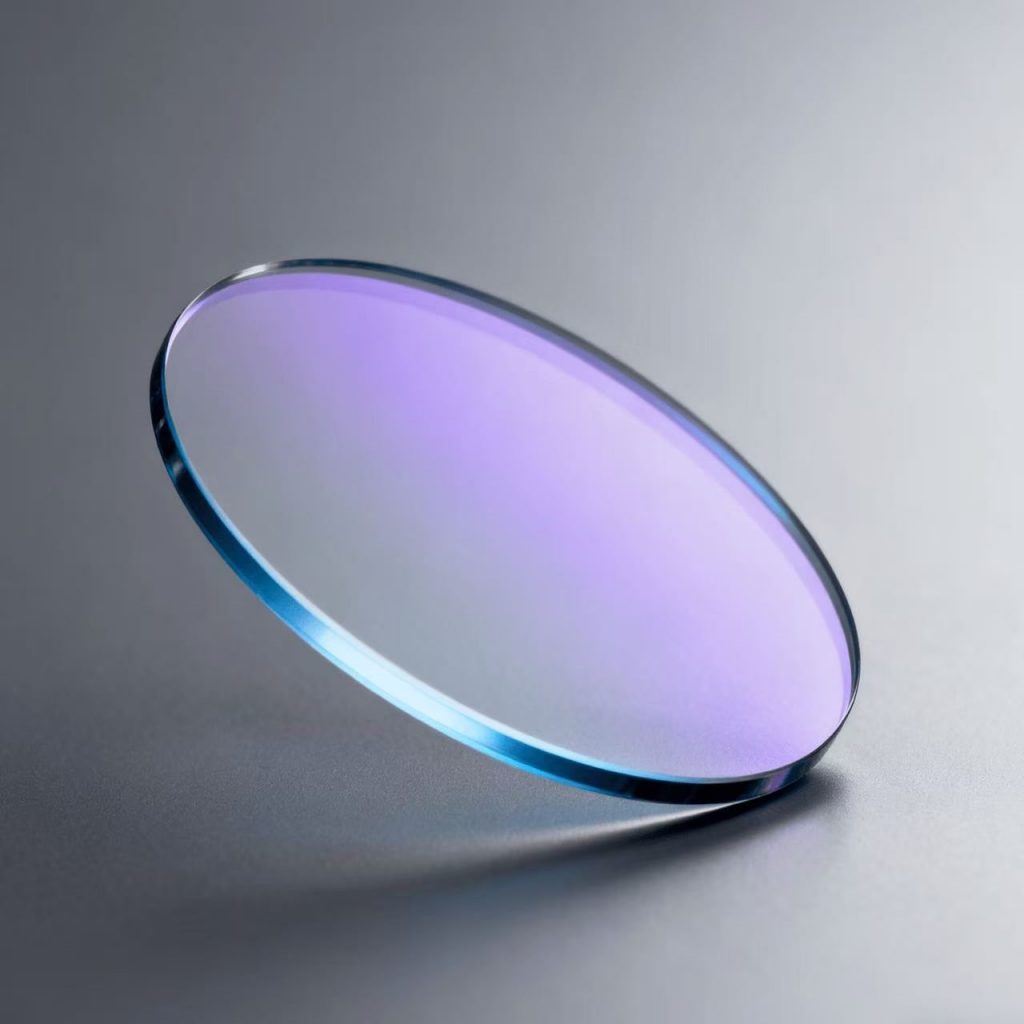
Coating is a pivotal step in window customization. Applying tailored optical thin-film coatings dramatically enhances functional performance. Anti-reflection (AR) coatings minimize surface reflections and maximize transmittance—designed for single-wavelength, dual-band, or broadband operation. High-reflection (HR) coatings transform the window into a functional mirror. Bandpass filters transmit only designated wavelengths while blocking others. Beamsplitter coatings divide incident light into predetermined transmission and reflection ratios. Metallic coatings—such as aluminum, silver, or gold—are employed for high-performance mirrors, each optimized for specific spectral regions.
(V) Mechanical and Environmental Durability
Edges of optical windows are typically chamfered or beveled to prevent chipping, protect personnel from sharp edges, and facilitate mounting. Depending on the operating environment, additional properties may be required—such as water resistance, anti-fogging capability, salt-spray resistance, or chemical corrosion resistance. Windows deployed outdoors or in harsh industrial settings demand significantly higher environmental robustness.
4.Application Areas
(I) Industrial Vision and Inspection
In automated production lines, windows shield sensitive camera lenses and sensors from dust, oil contamination, and mechanical impact by workpieces—ensuring stable, accurate inspection. Installing appropriate windows improves equipment reliability and service life, reducing failures caused by external environmental factors.
(II) Security and Surveillance
Outdoor surveillance cameras feature rugged front windows designed to withstand rain, wind, UV exposure, and temperature fluctuations. These windows not only safeguard the lens but also preserve image clarity and stability—providing dependable support for security monitoring systems.
(III) Scientific Research and Medical Devices
In spectrometers and microscopes, windows serve as sealed barriers for sample chambers—permitting light transmission without compromising internal environmental integrity. In medical diagnostics—such as optical imaging or endoscopic systems—windows play a vital role in ensuring measurement accuracy and clinical reliability.
(IV) Aerospace
Observation windows in aircraft and satellites must endure extreme pressure differentials and wide thermal gradients. These windows maintain structural integrity and optical performance under demanding high-altitude conditions—ensuring uninterrupted operation and data fidelity.
(V) Consumer Electronics
Cameras and sensors in smartphones, tablets, and wearable devices incorporate miniature optical windows. These must be ultra-thin, scratch-resistant, and fingerprint-repellent to enhance user experience. Though seemingly simple, such applications involve sophisticated optical design and precision manufacturing.
Optical windows are indispensable components across modern optical and electronic systems. A thorough understanding of their fundamental principles, material characteristics, fabrication methods, customization parameters, application contexts, and criteria for selecting qualified manufacturers enables informed decision-making—ensuring optimal performance and long-term reliability for diverse optical systems.