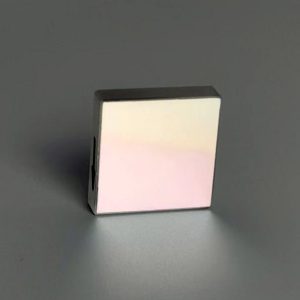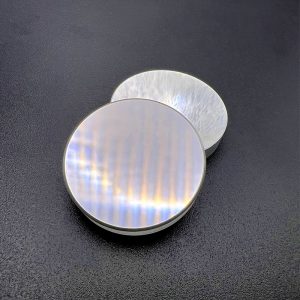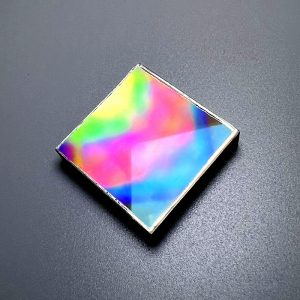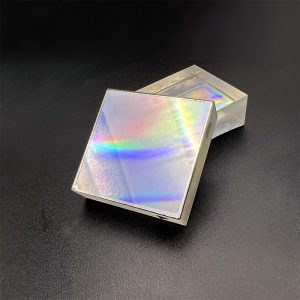
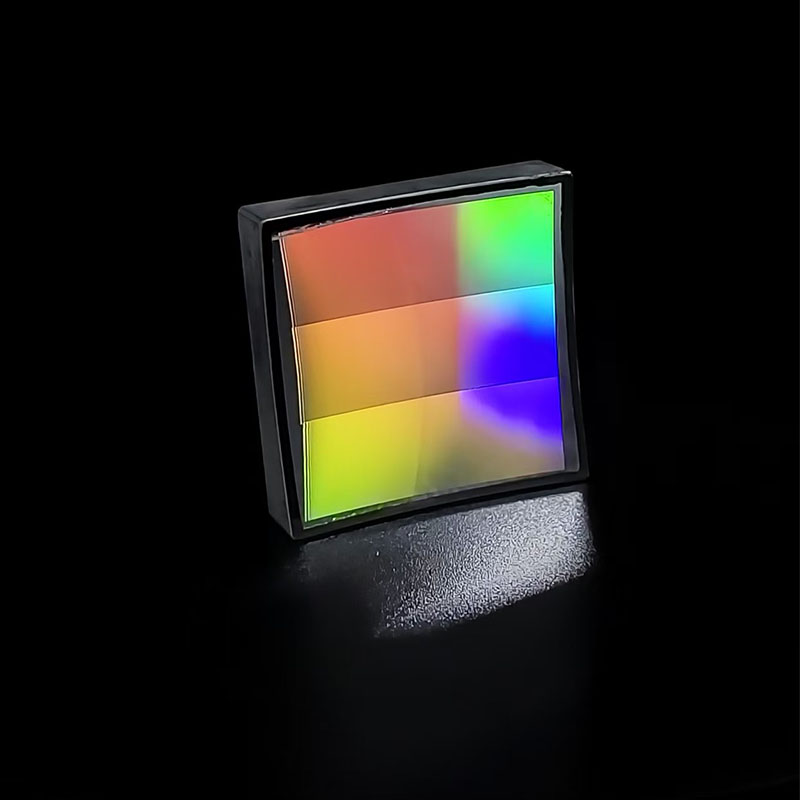
- Fixed Optical Path: The entrance and exit slits remain stationary; wavelength scanning is achieved solely by rotating the grating—ensuring mechanical stability and operational reliability.
- Aberration Optimization: Computer-aided design enables significant reduction of astigmatism and coma, thereby enhancing image quality and spectral resolution.
- System Integration: A single grating replaces multiple discrete optical components (e.g., collimating and focusing mirrors) traditionally required in monochromator systems—ideal for space-constrained setups or applications demanding high optical throughput.
- Applications: Primarily employed in UV–visible spectroscopy and fluorescence spectrometers—where broad spectral coverage and exceptional optical path stability are critical.
| Parameter Name | Technical Specification |
| Groove Density | 1200 grooves/mm |
| Blazed Wavelength Range | 200–290 nm |
| Active (Grating) Area | 40 × 45 mm |
| Substrate Material | Optical Glass K9 |
| Reflective Coating | Aluminum |
| Grating Type | Concave Holographic Grating (Type IV, Fixed-Slit Configuration) |
| Typical Application | Seya-Namioka Monochromator |

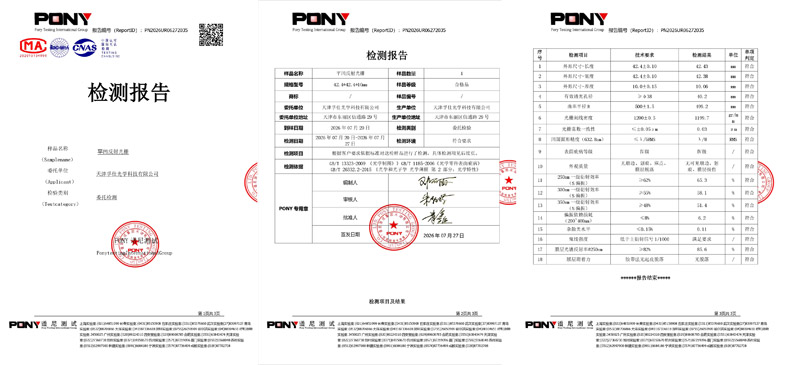
Authoritative inspection reports: Contact customer service for original copies.