
In the field of optics, near-infrared (NIR) transmission gratings are optical components of significant practical value. By integrating the unique properties of near-infrared light with the operational principles of transmission diffraction gratings, they serve critical functions across diverse domains.
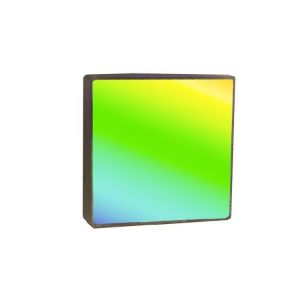
Near-infrared light lies electromagnetically between visible and mid-infrared radiation, typically spanning wavelengths from 780 nm to 2500 nm. Though invisible to the human eye, it offers a distinctive “window” into the internal structure of materials. NIR light exhibits moderate penetration into biological tissues—reaching several centimeters beneath the skin—while being selectively absorbed by key biomolecules such as hemoglobin in blood. This dual capability makes it exceptionally well-suited for medical diagnostics and non-destructive testing. Moreover, its relatively low photon energy avoids ionizing damage to living tissue, ensuring high biocompatibility and safety.
A transmission grating is a type of diffraction grating fabricated by etching numerous parallel, equally spaced, and uniformly wide slits onto a transparent substrate—commonly optical glass. Based on multi-slit diffraction, it disperses polychromatic light into its spectral components. Specifically, such gratings are produced by scribing fine, equidistant grooves onto an optically flat glass surface; the grooved regions scatter or block most incident light (acting like ground glass), whereas the ungrooved intervals function as narrow, light-transmitting slits. However, due to inherent limitations—including relatively low diffraction efficiency and poor signal-to-noise ratio—transmission gratings are rarely used in modern spectrometers, where reflective gratings are preferred as the primary dispersive element.
A linear transmission grating system comprises a scale grating, an index grating, a light source, lenses, photodetectors, and associated signal-processing circuitry. The scale and index gratings—also referred to respectively as the “long” and “short” gratings—feature identical line densities. The long grating is typically mounted on a stationary part of a machine tool (e.g., the bed), with its length matching the full travel range of the worktable. Conversely, the short grating is affixed to the moving component (e.g., the worktable itself). As the table moves, the index grating shifts relative to the scale grating. In operation, the two gratings are aligned nearly parallel, separated by a small, controlled gap (typically 0.01–0.1 mm), and slightly rotated relative to one another—introducing a minute angular offset between their rulings. In practice, the light source, index grating, and photosensitive elements are integrated into a compact unit known as the “read head.” Thus, a complete grating-based position measurement system consists essentially of just two core components: the read head and the scale grating.
When near-infrared light impinges upon a transmission grating pair, the underlying mechanism is multi-slit diffraction. With the long and short gratings superimposed at a slight angular tilt and maintained at a precise separation, incident collimated NIR light undergoes combined transmission and diffraction effects. As a result, coarse, high-contrast interference fringes—known as Moiré fringes—emerge perpendicular to the bisector of the angle θ formed between the two grating rulings. These fringes alternate regularly between bright and dark bands. The center-to-center distance between adjacent bright (or dark) bands defines the Moiré fringe pitch B. Geometrically, B relates to the grating period W and the inter-grating angle θ through a well-defined functional relationship.
In near-infrared spectroscopy (NIRS), NIR transmission gratings play a pivotal role. NIRS is an analytical technique that probes material composition and physical properties by measuring how samples interact with NIR radiation—specifically, via absorption, reflection, or transmission. Unlike mid-infrared spectroscopy—which directly detects fundamental molecular vibrational modes—NIR spectroscopy primarily captures overtones and combination bands. Though these weaker vibrational “echoes” yield lower-intensity signals, they still carry rich, chemically relevant information about sample composition. Here, transmission gratings serve as efficient dispersive elements, separating broadband NIR light into its constituent wavelengths—enabling precise, wavelength-resolved measurements of absorption, reflection, or transmission characteristics.
In the pharmaceutical industry, NIR spectroscopy supports both quality assurance and process understanding. NIR transmission gratings facilitate raw-material verification—confirming batch consistency without opening packaging. They also enable real-time monitoring of powder blending homogeneity during tablet manufacturing and permit non-invasive moisture analysis in powders and lyophilized products.
In food and agriculture, producers rely on NIR spectroscopy to maintain product quality while sustaining high throughput. NIR transmission gratings support fruit quality assessment—estimating ripeness or sugar content—and grain analysis—determining protein and moisture levels. In meat processing, they allow rapid, non-contact fat-content monitoring without cutting or sampling.
In chemical manufacturing and process control, NIR spectroscopy delivers real-time insights into reaction progress and formulation status. NIR-transmissive gratings enable online process monitoring—tracking polymerization or blending in real time—remote measurements via optical fibers—even through glass windows or within hazardous environments—and enhanced operational safety by minimizing manual sampling in high-risk zones.
NIR-transmissive gratings also play a vital role in biomedical applications. For tissue analysis, for instance, their integration with the diffuse reflectance characteristics of the 1100–2526 nm spectral range enables compositional analysis up to 3 mm beneath the skin surface. In industrial settings such as petroleum refining, NIR spectroscopy predicts crude oil density and cloud point; here, NIR-transmissive gratings significantly improve spectral measurement accuracy—reducing error to under 0.8%.
As the technology advances, NIR-transmissive gratings continue to evolve. Miniaturized NIR spectrometers now cover 950–1650 nm and achieve single-scan acquisition in under 30 seconds—a performance leap made possible largely by optimized grating design. Even modified smartphones—stripped of certain internal components—can capture images across 780–1100 nm; when paired with grating-based optics, they become portable spectral acquisition tools—a capability rooted directly in recent advances in NIR-transmissive grating technology. Standardization has also matured: per ASTM guidelines, NIR spectroscopic methods require calibration models incorporating temperature and humidity compensation to ensure measurement stability. Common measurement configurations include:
- Transmission mode—for liquids and homogeneous solids, with optical path lengths of 1–10 mm;
- Diffuse reflectance mode—for powders or opaque samples, offering analysis depths of 2–5 mm;
- Fiber-optic probe mode—for industrial online monitoring, operating reliably from –20°C to 150°C.
These standardized configurations further enhance the effectiveness and versatility of NIR-transmissive gratings.
As a critical optical component, NIR-transmissive gratings are indispensable to NIR spectroscopy and its broad range of applications. With continued technological advancement, their utility is poised to expand into even more domains—bringing greater efficiency, insight, and innovation to science, industry, and everyday life.