
In the field of optics, conventional plane ruled gratings hold a pivotal position among optical components, playing a critical role in spectroscopic analysis, optical metrology, and numerous other applications. This article provides a comprehensive overview covering their fundamental concepts, operating principles, fabrication techniques, and application domains.
Fundamental Concepts
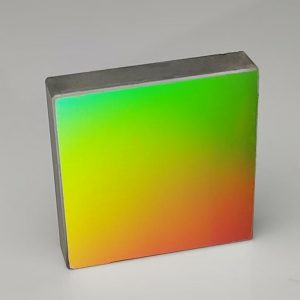
Conventional plane ruled gratings belong to the broader category of diffraction gratings. They are typically fabricated by ruling a series of uniformly spaced, equally wide grooves onto an extremely flat glass substrate. The grooved regions behave optically like ground glass—most incident light is scattered or absorbed rather than transmitted—while the ungrooved intervals act as narrow slits permitting light transmission. Such gratings fall into two main types: transmission gratings and reflection gratings. Transmission gratings allow incident light to pass through, but their optical performance is generally inferior; thus, they are rarely employed in modern grating spectrometers. Instead, reflection gratings serve as the preferred dispersive elements.
Operating Principles
Transmission Grating Principle
Transmission gratings operate on the principle of multi-slit diffraction to disperse polychromatic light. When collimated light impinges normally upon the grating surface, distinctive interference patterns emerge due to combined transmission and diffraction effects. A typical linear transmission grating system comprises a scale grating, an index grating, a light source, lenses, photodetectors, and associated signal-processing circuitry. The line densities of the scale and index gratings are identical. The longer scale grating is usually mounted on a stationary part of a machine tool, while the shorter index grating is affixed to a moving component. As the worktable translates, relative motion occurs between the two gratings. When superimposed with precise parallelism and maintained at a small angular offset, the overlapping rulings generate periodic, high-contrast fringes—known as Moiré fringes—oriented perpendicular to the ruling direction. The spacing between adjacent bright (or dark) bands defines the Moiré fringe pitch. Given a grating pitch W and a small angular deviation θ between the two sets of rulings, a well-defined geometric relationship governs the fringe spacing. Owing to the minute value of θ, these fringes provide a robust physical basis for high-precision displacement measurement.
Reflection Grating Principle
Reflection gratings achieve spectral dispersion via reflected light. Upon illumination, light of different wavelengths reflects at distinct angles from the grating surface, thereby separating composite light into its constituent spectral components. This behavior arises from the combined effects of reflection and interference: the periodic groove structure induces constructive and destructive interference among reflected wavefronts, resulting in a characteristic angular distribution of diffracted orders.
Fabrication Techniques
Ruling Process
The core of conventional plane ruled grating fabrication lies in the ruling process itself—a highly demanding procedure requiring exceptional mechanical precision and environmental stability. Diamond-tipped scribing tools are commonly employed to inscribe fine, uniform grooves onto glass or other suitable substrates. Groove accuracy directly determines key grating performance metrics—including spectral resolution and diffraction efficiency. Critical parameters such as groove width uniformity, pitch consistency, and straightness must be rigorously controlled. Achieving this necessitates ultra-stable mechanical positioning systems and vibration-isolated, temperature-controlled environments to suppress external disturbances.
Post-Ruling Processing
Following groove inscription, several post-processing steps are essential. Surface cleaning removes debris and contaminants generated during ruling, ensuring optical-grade surface smoothness. Additional treatments—such as thin-film coating—may also be applied to enhance reflectivity (for reflection gratings) or transmittance (for transmission gratings), thereby optimizing overall optical performance.
Application Domains
Spectroscopic Analysis
Conventional plane ruled gratings serve as indispensable dispersive elements in spectroscopic instrumentation. By spatially separating light according to wavelength, they enable precise acquisition and interpretation of spectral signatures. Spectral features reveal vital information about material composition, molecular structure, and electronic transitions. In analytical chemistry, grating-based spectrometers facilitate both qualitative and quantitative elemental analysis. In astronomy, they empower researchers to decode stellar and galactic spectra—yielding insights into chemical abundances, kinematics, and evolutionary histories.
Optical Metrology
Gratings find extensive use in precision optical measurement. For instance, Moiré fringe-based displacement sensors exploit the predictable movement of interference fringes to achieve nanometer-level positional resolution. Counting fringe shifts and determining their direction allows accurate reconstruction of translational motion. Similarly, angular and velocity measurements benefit significantly from grating-based sensing architectures.
Laser Technology
In laser systems, gratings support critical functions including wavelength selection and beam shaping. Appropriately designed gratings can enforce narrowband spectral output, enabling tunable or single-wavelength operation tailored to specific applications. Moreover, they can manipulate beam profiles—modifying intensity distributions and spatial modes—to meet stringent requirements in materials processing, communications, and scientific research.
Development Trends
Toward Higher Precision
As science and technology continue to advance, the demand for higher precision in diffraction gratings is growing steadily. In the future, conventional plane ruled gratings will evolve toward ever-greater accuracy—achieving tighter control over groove spacing and width—to enhance spectral resolution and measurement fidelity.
Miniaturization
In applications such as portable spectrometers and miniature optical sensors, compact grating designs are essential. Consequently, miniaturization has become a key developmental trend. Leveraging micro- and nanofabrication techniques, it is now possible to produce gratings that are not only smaller in physical footprint but also superior in optical performance.
Multifunctionality
To meet diverse application requirements, gratings are increasingly designed with multifunctional capabilities. For instance, researchers are developing gratings with tailored, multi-modal diffraction properties—enabling them to perform several optical functions simultaneously—thereby boosting the integration level and overall performance of optical systems.
As a fundamental optical component, conventional plane ruled gratings play an irreplaceable role across optics. With ongoing technological progress, their use will expand into new domains, continuously fueling innovation and advancement in optical science and engineering.