
In laser resonator design and high-precision optical systems, minimizing reflection loss while achieving linearly polarized output remains a central concern for engineers. The Brewster mirror—also known as a Brewster window or colloquially as a Brewster element—leverages the Brewster angle principle to allow p-polarized light to pass through with virtually no loss, while strongly suppressing s-polarized light. It is thus an indispensable optical component in high-power lasers and spectroscopic systems.
1.What Is a Brewster Mirror?
Brewster Windows: A Comprehensive Guide
A Brewster window typically refers to an optical flat or window plate mounted at the Brewster angle (θB), fabricated from substrates such as UV-grade fused silica, N-BK7, or crystalline materials. Its surfaces may be coated with anti-reflection (AR) or high-reflection (HR) films—tailored to meet diverse optical path requirements.
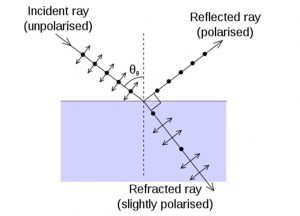
Brewster’s Law: tan θB = n2 / n1
(where n1 is the refractive index of the incident medium—e.g., air ≈ 1.0; n2 is the refractive index of the optical material)
When light strikes the surface precisely at θB, p-polarized light (electric field vector parallel to the plane of incidence) experiences virtually zero reflection—achieving near-100% transmission. In contrast, s-polarized light (electric field perpendicular to the plane of incidence) undergoes partial reflection. This fundamental asymmetry forms the physical basis for both polarization selectivity and ultra-low-loss transmission.
2.Key Advantages of Brewster Windows
Near-Zero Reflective Loss for p-Polarized Light
At the Brewster angle, reflective loss for p-polarized light approaches zero—making Brewster windows ideal for high-gain, low-loss laser cavities.
- Built-in Polarization Selection
After multiple round trips within a cavity, s-polarized components are progressively suppressed, resulting in naturally linearly polarized laser output—eliminating the need for external polarizers. - High Laser-Induced Damage Threshold (LIDT)
Uncoated fused silica substrates withstand irradiance levels up to the GW/cm² range—suitable for nanosecond (ns), picosecond (ps), femtosecond (fs) ultrafast lasers, and high-power continuous-wave (CW) systems. - Broad Spectral Coverage
Depending on substrate choice, operational ranges span ultraviolet (UV) through visible (VIS), near-infrared (NIR), and mid-infrared (MIR) bands. - Hermetic Sealing & Environmental Isolation
Brewster windows serve effectively as sealed laser tube end-caps—providing robust isolation between gain media and ambient environments while maintaining minimal optical loss.
3. Typical Application Areas
- Laser Resonators
Used in gas lasers (e.g., He–Ne, CO₂, Ar⁺), solid-state lasers, and fiber lasers—inserted directly into the cavity to enforce linearly polarized output. - Ultrafast & Mode-Locked Laser Systems
Employed for intra-cavity dispersion compensation or precise polarization control. - Spectrometers & Interferometers
Integrated into polarization-sensitive measurements to enhance signal-to-noise ratio (SNR). - Optical Communications & Research Labs
Applied in polarization state analysis and modular optical testbed construction.
4.Key Selection Parameters for Procurement
International buyers commonly need to specify the following technical parameters when requesting quotations:
- Substrate Material: Fused silica (optimal for UV–NIR), N-BK7, CaF₂, MgF₂, or sapphire—selected based on target wavelength band.
• Dimensions: Standard diameters range from Ø5 mm to Ø50.8 mm; rectangular or custom shapes also available. Thickness typically falls between 1 mm and 5 mm.
• Angular Accuracy: Brewster-angle tolerance is generally ≤ ±3 arcminutes; high-precision versions achieve ±5 arcseconds.
• Surface Quality: Typically specified per MIL-O-13830A standard—e.g., 40/20 or 20/10 scratch-dig; advanced grades reach 10/5.
• Surface Flatness: λ/4 or λ/10 @ 632.8 nm.
• Coating Requirements: Often left uncoated—relying solely on intrinsic Brewster-angle behavior—but single- or double-side AR coatings or HR coatings for specific wavelengths can be applied upon request.
• Laser-Induced Damage Threshold (LIDT): Critical for high-power applications—must be explicitly stated (e.g., >10 J/cm² @ 1064 nm, 10 ns pulse width).
⚠️ Note: The Brewster angle varies with both material dispersion and operating wavelength. Always provide your exact working wavelength so manufacturers can calculate the precise angle.
5. Common Misconceptions & Practical Considerations
- Misconception: “A Brewster window reflects no light.”
Reality: Zero reflection applies only to p-polarized light incident exactly at the Brewster angle. - Overlooking Thermal Effects:
At high power, thermal depolarization induced by heating of the gain medium increases s-polarized losses—degrading overall efficiency. - Mounting Precision Matters:
The incident beam must lie precisely within the plane of incidence, and angular alignment must be finely adjustable—micro-adjustment mechanisms are therefore standard in real-world setups.
Conclusion
Thanks to its dual advantages—near-lossless transmission of p-polarized light and inherent polarization selection—the Brewster window remains a cornerstone optical component for laser manufacturers and research institutions alike. Careful selection of substrate material, angular precision, and surface quality is essential to ensure optimal performance, stability, and long-term reliability of laser systems.
Need a quotation or feasibility assessment for a custom Brewster window? Contact us today for a complimentary technical consultation and sample evaluation!