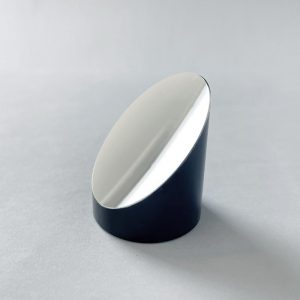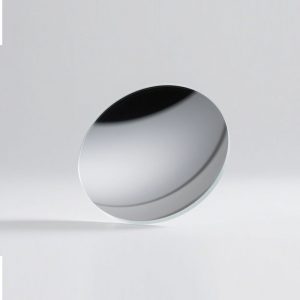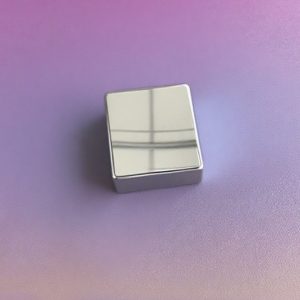
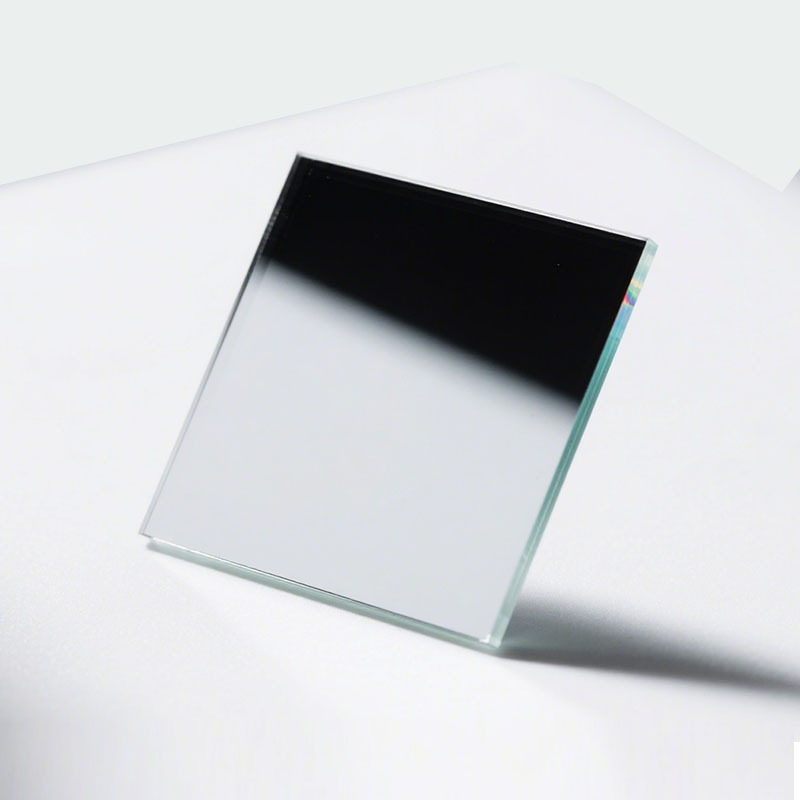
A flat mirror is a fundamental optical component featuring a planar reflective surface, widely employed across optical engineering due to its distinctive properties. From an imaging perspective, it represents the simplest optical element capable of producing perfect, undistorted images. It strictly obeys the law of reflection—where the angle of incidence equals the angle of reflection—and generates virtual images that exhibit exact mirror symmetry relative to the object. Optically, flat mirrors preserve the collinearity (or “concentricity”) of incident light beams—a critical attribute enabling their use in intricate beam-folding configurations.
Based on reflective surface configuration, flat mirrors fall into two main types: front-surface mirrors and back-surface mirrors. In terms of directional influence on light, flat mirrors possess unique functional characteristics. Within optical paths, they are primarily deployed to redirect beam propagation. As ideal optical elements, they introduce no aberrations into the system; thus, during ray-tracing calculations, they are often treated as geometric folds rather than discrete optical surfaces. Beyond optics, flat mirrors also find distinctive applications in art—leveraging their symmetrical imaging behavior to create compelling visual illusions.
| Specifications | |
| Coating | Customizable |
| Dimensional Tolerance (Outer Diameter) | +0 / −0.02 mm |
| Thickness Tolerance | ±0.05 mm |
| Surface Flatness | λ/10 |
| Surface Quality | 20-10 |
| Centration Error | ±30 Arc Seconds |
| Clear Aperture | ≥ 90% |
| Edge Bevel | <0.2*45° |