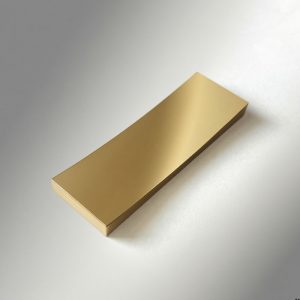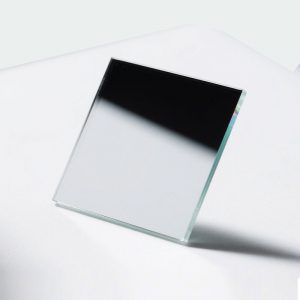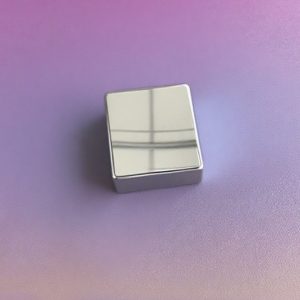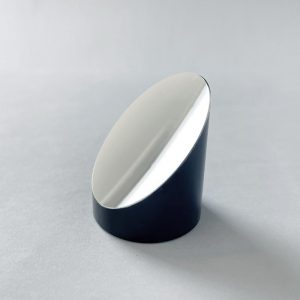
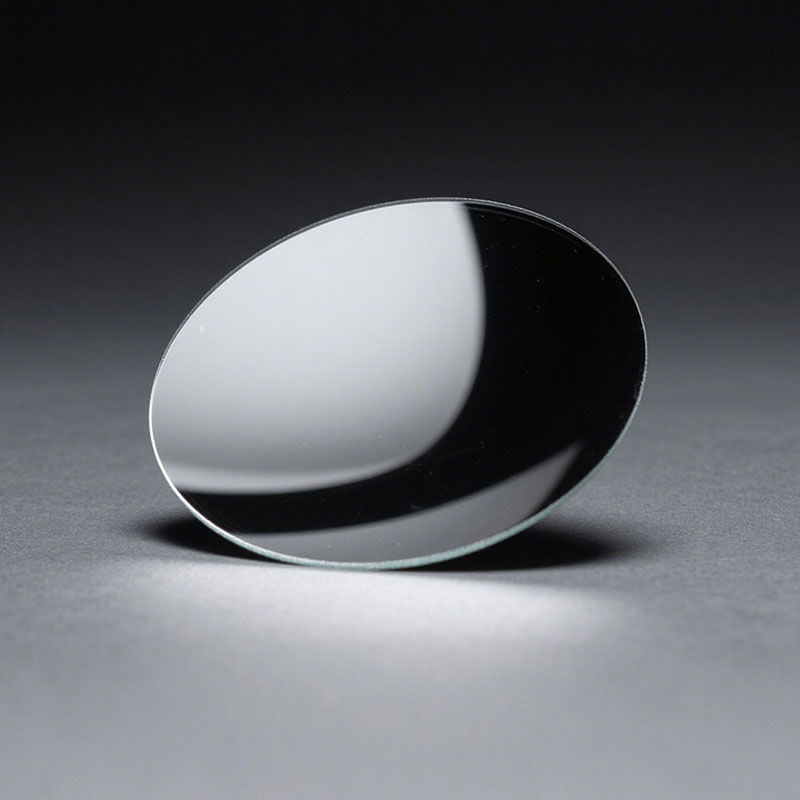
A dielectric mirror is a reflective optical component fabricated by depositing multiple layers of dielectric thin films onto an optical substrate, leveraging the principle of optical interference. Compared with conventional metal mirrors, dielectric mirrors possess several distinctive advantages that make them widely applicable across diverse optical fields.
One prominent feature is their exceptionally high reflectance. By carefully designing and precisely controlling parameters such as the number of layers, thickness, and refractive index of the dielectric coatings, near-total reflectance can be achieved within a targeted wavelength range.
Another key attribute is spectral selectivity. Custom coating architectures can be engineered to deliver high reflectance in specific wavelength bands while simultaneously enabling low reflectance—or even high transmittance—in other spectral regions—tailored precisely to application requirements.
Dielectric mirrors also exhibit extremely low optical absorption. The dielectric materials used absorb negligible amounts of incident light, generating minimal heat during reflection. This enables the mirror to withstand significantly higher laser power densities without thermal damage, thereby ensuring long-term stability and reliability of the optical system.
Furthermore, dielectric mirrors offer excellent chemical stability and environmental robustness. The dielectric coating materials are highly resistant to chemical corrosion and oxidation. Their optical performance remains stable across varying operational environments, minimizing performance drift caused by external factors—thus extending service life and reducing maintenance overhead.
| Specifications | |
| Coating | Customized per wavelength band and required reflectance |
| Dimensional tolerance | ±0.05 mm |
| Thickness tolerance | ±0.05 mm |
| Surface figure | λ/10 |
| Surface figure | 40-20 |
| Laser-induced damage threshold (LIDT) | 20 J/cm2, 10ns, 20Hz, @1064nm |
| Clear aperture | ≥ 90% |
| Edge chamfer | <0.2*45° |