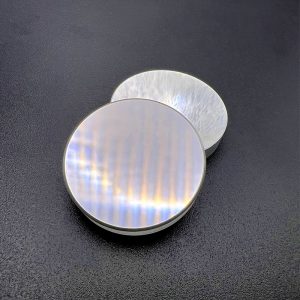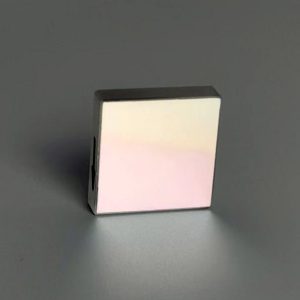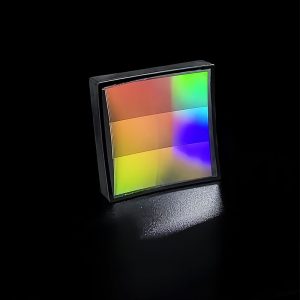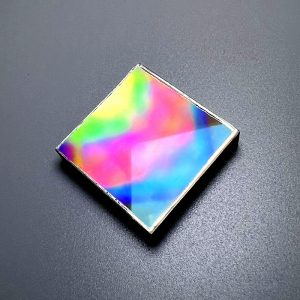
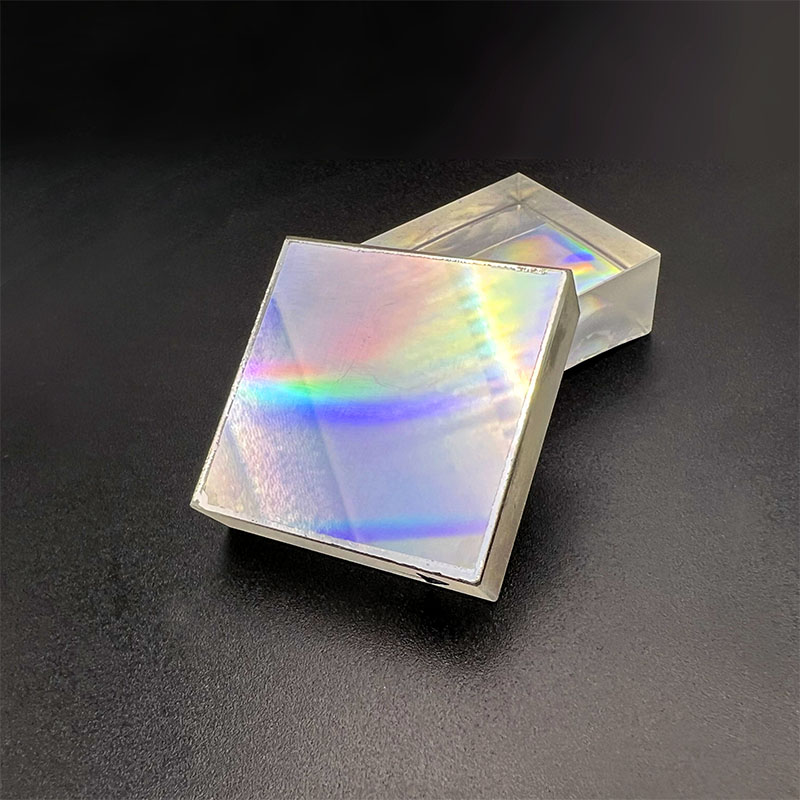
The transmission grating is a fundamental type of diffraction grating. Its design features an array of parallel, uniformly spaced, and identically wide transparent slits fabricated on the surface of a transparent optical substrate—such as optical glass. Incident polychromatic light undergoes dispersion via multi-slit diffraction. The grooved (etched) regions scatter light strongly and thus behave effectively as opaque areas, while the ungrooved regions serve as the light-transmitting slits.

Structure, Applications, and Selection Criteria for Transmission Gratings
Structural Principle: A transmission grating is fabricated by ruling a series of parallel, uniformly spaced, and equally wide grooves onto the surface of an optically flat glass substrate. Due to strong light scattering, the grooved regions become effectively opaque; the ungrooved regions, in contrast, form an array of light-transmitting slits. Spectral separation is achieved through the combined effects of diffraction and interference.
| Groove Density | 100 – 2400 lines/mm |
| Blaze Angle | Customizable (target blaze wavelength must be specified) |
| Standard Coating | Aluminum (high-reflectivity coating) |
| Grating Type | Transmission-type blazed diffraction grating |
| Substrate Material | Optical glass K9 / UV-grade fused silica |
| Dimensional Tolerance (Outer Dimensions) | ±0.5 mm |
| Thickness Tolerance | ±0.5 mm |
| Typical Groove Density Options | 300 l/mm, 600 l/mm, 1200 l/mm, 1800 l/mm |